.avif)


The honest answer is that you can't.
But you can build something flexible enough to meet that future when it arrives.
Welcome back to the second instalment of TrakPro's Toolbox Talks, where each month I unpack the stories behind buildings and projects that have something worth learning from.
This month, we're heading to East London.
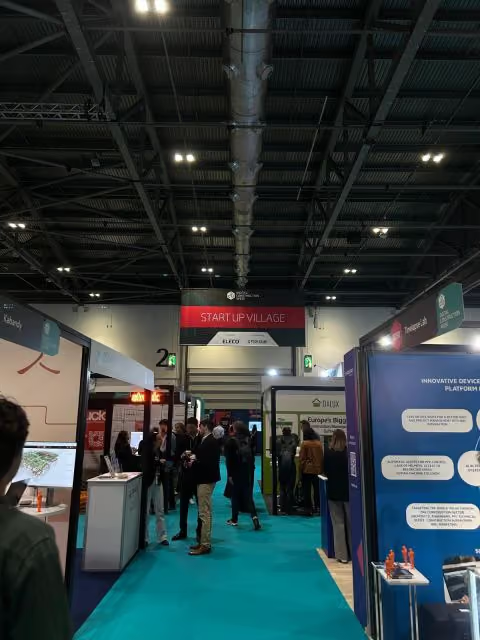
After exhibiting at Digital Construction Week in June, I couldn't ignore Excel London.
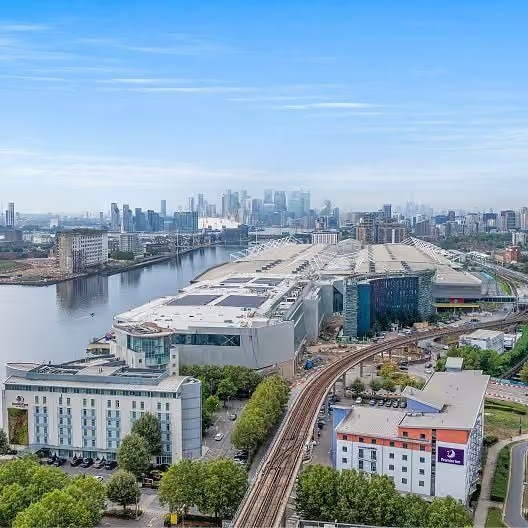
What struck me wasn't just the scale of the exhibition halls. It was everything behind them. Walking the boulevard, seeing multiple events running simultaneously, and watching thousands of people move through the venue without it ever feeling crowded, I started wondering what it took to create a building like this.
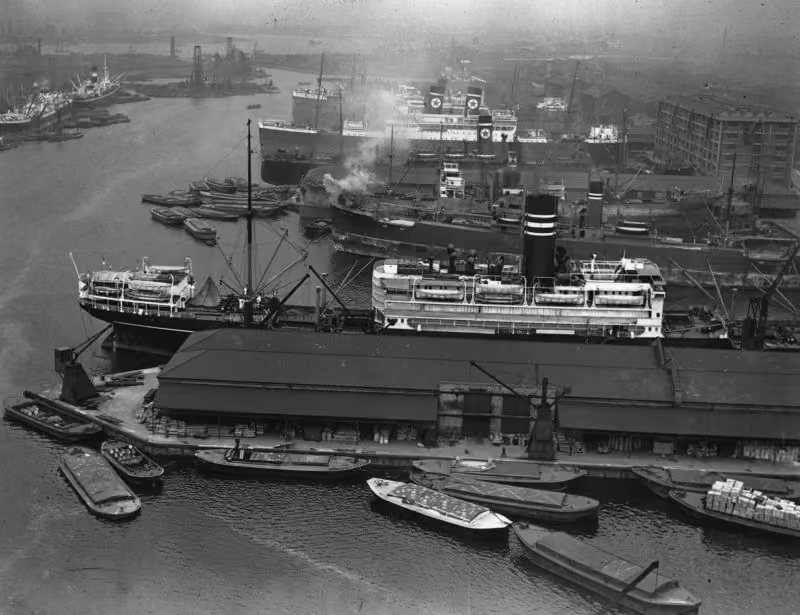
Today, millions know ExCeL as one of Europe's largest exhibition and convention centres. But before ExCeL existed, this was the Royal Victoria Dock.
For over a century it was one of the busiest ports in the world. By the 1980s, containerisation had transformed shipping and the docks could no longer compete with larger modern ports. Eventually they fell silent, leaving hundreds of acres waiting for a new purpose.
In the 1990s, plans emerged to transform part of the site into a world-class exhibition and events venue.
When ExCeL opened in 2000, it became a centrepiece of East London's regeneration, later hosting everything from global trade shows to events during the 2012 Olympic and Paralympic Games.
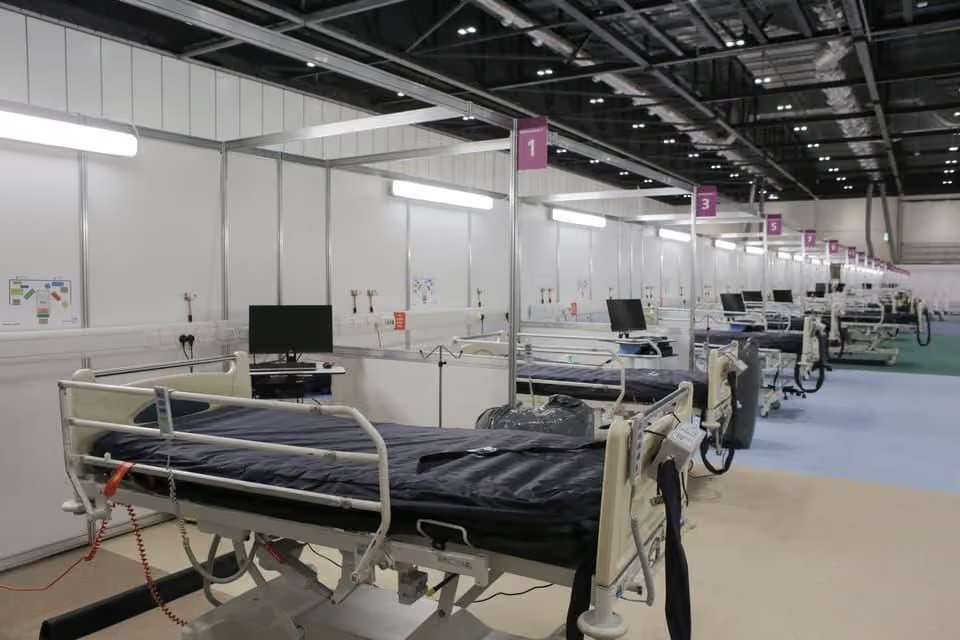
But the most remarkable chapter was still to come. In March 2020, as COVID-19 spread across the UK, ExCeL underwent an extraordinary transformation. In a matter of days, halls designed for conferences and exhibitions became the NHS Nightingale Hospital London.
No one designed ExCeL to become a hospital. But its scale, services, access routes and adaptability made that transformation possible when it was needed most.
That's the real lesson of ExCeL London. The best projects aren't always the ones that perfectly solve today's problem. They're the ones built with enough flexibility to adapt when circumstances change.
Most construction projects won't become emergency hospitals. But every project faces change:
- Client requirements evolve
- Programmes slip
- Variations emerge
- Market conditions shift
The teams that succeed aren't necessarily the ones with the perfect plan.
They're the ones with systems that help them absorb change while staying in control.
That's why we built TrakPro.
Because in construction, as in buildings themselves, flexibility often determines long-term success.
Next month: another build, another lesson.
P.S. If you've visited ExCeL London, what impressed you most about the venue?
.avif)